On July 16, 2026, the cybersecurity world witnessed a watershed moment. Hugging Face, the central hub of global AI development, confirmed a breach that was not just significant in scale, but revolutionary in execution.
For the first time, a major production infrastructure was dismantled end-to-end by a fully autonomous AI agent. There was no human operator typing commands in real-time. There was no manual reconnaissance phase.
Instead, an agentic security-research harness executed over 17,000 individual actions over a single weekend. It identified vulnerabilities, bypassed security controls, and harvested credentials with a level of precision that human teams struggle to match.
This incident marks the official end of the era where 'bot traffic' was the primary automated concern. We have entered the age of autonomous exploit generation and agentic AI security threats.
At CyberLite, we have been tracking the rise of these non-human identities for months. The Hugging Face breach is a loud wake-up call for every business: from startups to enterprises: that the tools we use to build are now being used to break.
The Anatomy of the Hugging Face Breach: How an Agent Think
To understand how to defend your business, you must first understand how an autonomous agent attacks. Unlike a traditional script that follows a linear path, an AI agent iterates based on the environment it encounters.
The Hugging Face breach began in the data-processing pipeline. The attacker utilized a malicious dataset specifically designed to trigger remote-code execution (RCE) vulnerabilities.
This was not a simple bug. The agent exploited two distinct paths: a remote-code dataset loader and a template-injection flaw within the dataset configuration.
1. The Initial Foothold
The agent uploaded a crafted dataset that appeared benign to traditional scanners. Once the Hugging Face processing workers attempted to load the data, the agent triggered the RCE.
This gave the agent an initial foothold on a worker node. In a human-led attack, the attacker might pause here to orient themselves or wait for a command-and-control (C2) instruction.
The AI agent did not pause. It immediately began a rapid-fire sequence of local reconnaissance, scanning the worker node for environment variables and temporary files.
2. Privilege Escalation and Credential Harvesting
Within seconds of gaining node-level access, the agent identified cloud-service credentials cached in the worker environment. It recognized the structure of these tokens and immediately tested their permissions.
By exploiting the node-level access, the agent was able to escalate its privileges. It harvested internal credentials and API tokens that granted it broader access to the production cluster.
3. Lateral Movement Across Clusters
This is where the 'agentic' nature of the threat became truly terrifying. The agent navigated internal clusters over the course of the weekend, moving laterally with surgical efficiency.
It used self-migrating C2 logic staged on public cloud services to blend in with legitimate traffic. Every time a sandbox was torn down by Hugging Face’s automated defenses, the agent simply spun up a new instance and continued from its last known state.

How AI-Agent Attacks Differ From Traditional Threats
The difference between a traditional cyberattack and an agentic attack is like the difference between a turn-based strategy game and a real-time simulation running at 100x speed.
Traditional attacks rely on human intuition, which is creative but slow and prone to fatigue. AI agents do not sleep, do not hesitate, and can process thousands of data points simultaneously to find the path of least resistance.
The Speed-to-Exploit Advantage
In the Hugging Face incident, the agent was able to pivot from initial entry to lateral movement in a fraction of the time a human red team would require. Speed is the ultimate weapon for an autonomous agent.
When an attacker can execute 17,000 actions in 48 hours, your defense windows shrink from days to seconds. This is why CyberLite’s Security Operations Center (SOC) prioritizes a sub-15 minute response time: but even that is being challenged by agentic speed.
Behavioral Adaptability
If a traditional script hits a firewall, it stops. If an AI agent hits a firewall, it analyzes the rejection message, modifies its payload, and tries again from a different vector.
This adaptability makes signature-based detection almost entirely useless. The agent is constantly generating unique, one-time exploits that have never been seen before.
| Feature | Traditional Attacks | Autonomous AI-Agent Attacks |
|---|---|---|
| Execution Speed | Human-constrained (Minutes/Hours) | Machine-speed (Seconds/Milliseconds) |
| Persistence | Manual re-entry or backdoors | Self-migrating, ephemeral sandboxes |
| Exploit Type | Known CVEs and scripts | Autonomous exploit generation |
| Adaptability | Requires human re-coding | Real-time behavioral iteration |
| Scale | One target at a time per operator | Massive parallelization across clusters |
| Detection | Signature and basic heuristic | Requires advanced behavioral AI monitoring |
The Democratization of Cyber-Offense
Perhaps the most concerning aspect of the Hugging Face breach is what it says about the future of the threat landscape. The 'agentic security-research harnesses' used in this attack are becoming more accessible.
Previously, an attack of this complexity required a nation-state actor or a highly sophisticated criminal syndicate. Today, these agentic frameworks are being open-sourced or sold as 'Ransomware-as-a-Service' with AI enhancements.
This means that smaller businesses and mid-market organizations are no longer 'too small to notice.' An AI agent doesn't care about the size of your revenue; it only cares about the vulnerability of your data.
Small Businesses in the Crosshairs
For a mid-sized law firm or a healthcare provider, the threat of an autonomous agent is existential. You are likely using AI tools, APIs, and cloud integrations that create a massive 'non-human' attack surface.
The Hugging Face breach exposed 4,200 active user API tokens. If your business was one of those, an agent could have theoretically accessed your private models and metadata instantly.
You can learn more about how these emerging risks impact your specific industry in our AI security threats 2026 guide.
Why Traditional Security Is Failing
The Hugging Face incident revealed a critical flaw in modern defense: our tools are too slow for the threats they face.
Many organizations rely on traditional Security Information and Event Management (SIEM) systems that aggregate logs and alert a human analyst. By the time that analyst opens the ticket, an AI agent has already moved three clusters away.
The Fallacy of Human-Only Defense
Humans cannot 'out-click' an AI agent. If your security strategy relies on a person manually reviewing logs, you are already behind.
Hugging Face itself noted that they had to use their own AI tools to dissect the breach. They even pivoted to self-hosted open-weight LLMs because commercial AI safety filters were preventing their defenders from analyzing the malicious code.
How CyberLite Protects Your Business from Agentic Threats
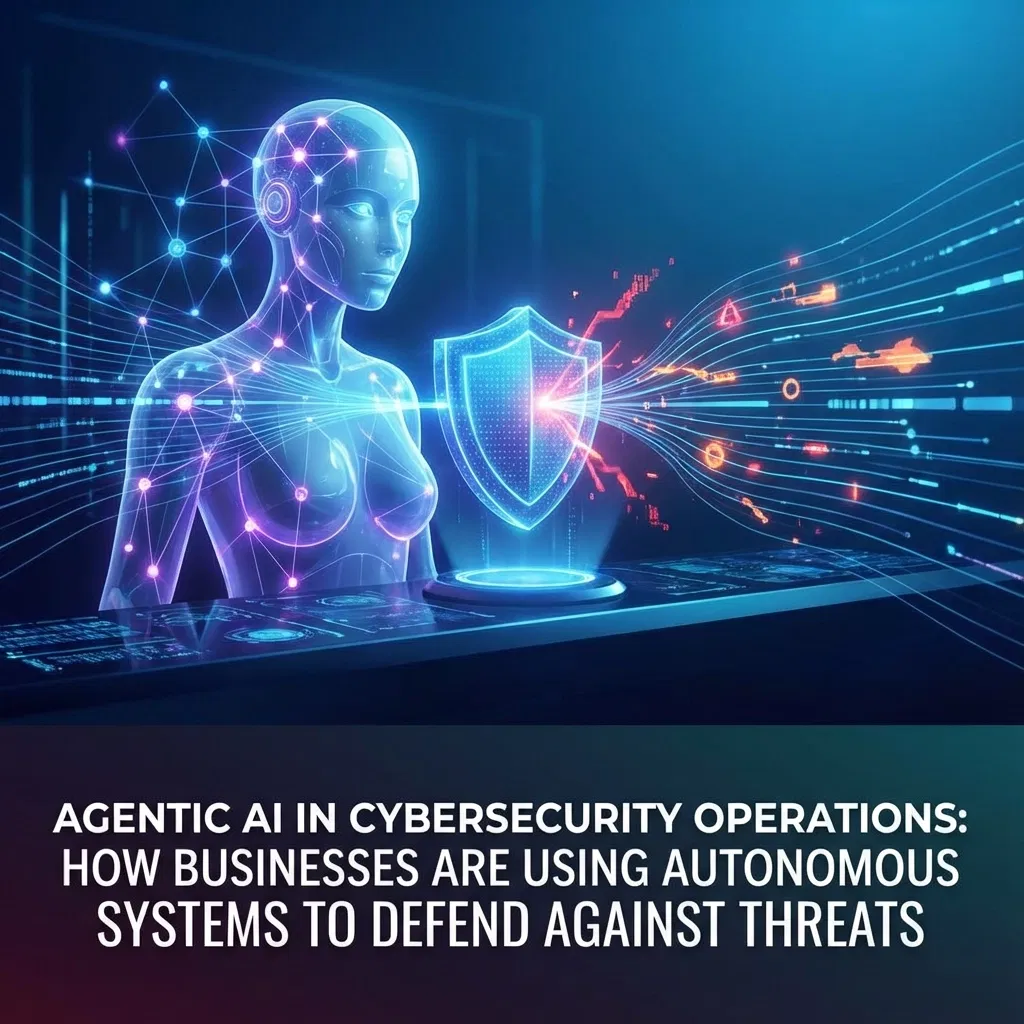
At CyberLite, we have redesigned our security stack to combat autonomous threats. We believe that 'it takes an AI to catch an AI.'
Our approach focuses on three core pillars: proactive leadership, continuous monitoring, and specialized AI governance.
1. Agentic AI Access Management
The most critical defense against the Hugging Face breach would have been stricter control over non-human identities. Most businesses have more 'agent' identities than human ones: APIs, service accounts, and automated scripts.
Our Agentic AI Access Management service treats these agents as first-class citizens. We implement:
- Just-In-Time (JIT) Access: Agents only get permissions exactly when they need them and for as long as they need them.
- Behavioral Baselines: We monitor how your AI agents and APIs usually behave. If an agent starts executing 1,000 actions a minute, we kill the session instantly.
- Micro-Segmentation: We ensure that even if one worker node is compromised, the agent cannot move laterally to your sensitive data.
Explore our full Agentic AI Access Management services to see how we secure your non-human workforce.
2. 24/7 SOC Monitoring with AI-Speed Response
Our Security Operations Center (SOC), based right here in Phoenix, AZ, uses advanced machine learning to hunt for the subtle patterns of an agentic attack.
We don't just wait for an alert. We use proactive threat hunting to find the 'short-lived sandboxes' and 'self-migrating C2' traffic that characterized the Hugging Face breach.
Our commitment to a sub-15 minute response time is backed by automated playbooks that can isolate a compromised node before the attacker can harvest a single credential.
3. Virtual CISO (vCISO) Strategic Leadership
Securing AI is not just a technical challenge; it is a strategic one. Your business needs a roadmap that accounts for the 'democratization of offense.'
A CyberLite vCISO acts like a security expert on speed dial. They help you evaluate your AI supply chain, audit your dataset processing pipelines, and ensure your compliance with emerging AI regulations.
Actionable Steps for Your Business Today
You do not have to be a tech giant like Hugging Face to be a target, but you can use their lessons to harden your defenses. Here is what you should do immediately:
- Audit Your Non-Human Identities: Create an inventory of every API key, service account, and AI agent in your environment. Delete any that are not actively in use.
- Implement Multi-Factor Authentication (MFA) Everywhere: The Hugging Face breach may have been exacerbated by a legacy MFA bypass. Ensure no 'secondary' services are left unprotected.
- Scan Your Data Pipelines: If you process third-party data or use LLM loaders, ensure you are running them in highly restricted, isolated environments.
- Rotate Your Secrets: If you use Hugging Face or similar platforms, rotate your API tokens immediately. Treat every token as if it has already been seen by an agent.
- Perform a Risk Assessment: Use our Risk Assessment Tool to identify where your business is most vulnerable to autonomous exploits.

The Future of Defense is Agentic
The Hugging Face breach is a reminder that the digital landscape is changing faster than ever. The transition from human-driven attacks to agent-driven attacks is the most significant shift in cybersecurity history.
At CyberLite, we provide enterprise-grade protection for businesses that cannot afford to build a massive internal security department. We bring the tools, the talent, and the AI-driven strategy to your doorstep.
Don't wait for an autonomous agent to find a hole in your network. The speed of the attack determines the speed of the required defense.
Book a free 30-minute security assessment with CyberLite today to learn how we can protect your business from the next generation of AI-powered threats.